+91 91577 89399
Call Us

Call Us
Email Us
Get Direction
In healthcare, many patients visit once, take consultation, receive treatment advice or follow-up instructions, but do not return for follow-up visits, procedures or continued treatment. In many cases, patients are not lost due to dissatisfaction, but due to delays, fear, confusion, financial planning, second opinions, busy schedules or simple postponement.
When patients do not return for follow-ups, it affects patient health outcomes, treatment continuity, hospital revenue, doctor-patient relationship, and long-term patient trust. The Revival Loop – Healthcare Version is designed to maintain patient continuity and revive inactive patients who were supposed to return for follow-ups, procedures or continued treatment.
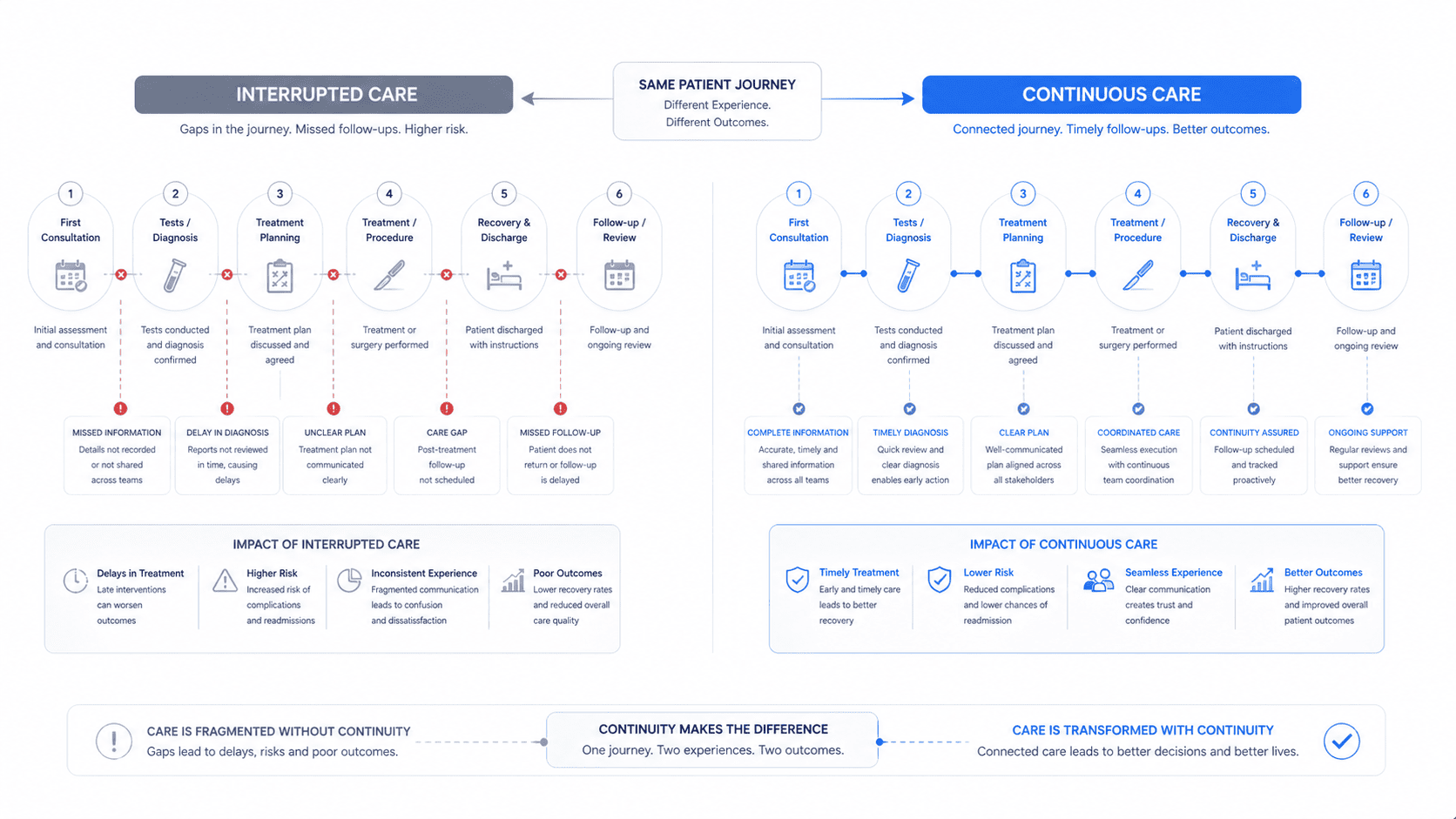
In many hospitals and clinics, patient discontinuity leads to poor health outcomes and loss of long-term patient relationships.
This is not a medical problem. This is a patient continuity and communication problem.
The system reconnects with these patients, maintains communication, understands their situation and encourages continuity of treatment and follow-up. The Revival Loop – Healthcare Version focuses on:
Identify patients who missed follow-ups, postponed procedures, stopped treatment, or haven't visited in a long time.
Reconnect with patients through structured and sensitive communication.
Understand reasons for delay or discontinuity in their healthcare journey.
Encourage follow-up visits and treatment continuation.
Maintain continuity communication over time.
The objective is not aggressive follow-up, but patient continuity and care continuity.
Many hospitals focus on new patients. This system focuses on continuity of existing patients. The system improves not only hospital operations but also patient health outcomes and patient experience.
Healthcare is not only about consultation and treatment. Healthcare is about continuity of
care.
Many medical outcomes depend on follow-ups, continued treatment and patient
continuity.
The Revival Loop – Healthcare Version ensures that patients do not get lost between
consultations, follow-ups and treatment decisions.