+91 91577 89399
Call Us

Call Us
Email Us
Get Direction
In many hospitals, one of the most common sources of patient dissatisfaction and complaints is unexpected or misunderstood billing. Patients and their families often focus primarily on treatment and recovery during hospitalization, and detailed billing discussions usually happen only at the time of discharge.
When the final bill is higher than expected, or when billing components are not clearly understood, it often leads to stress, disputes, complaints and negative patient experience. This situation is commonly known as the “Bill Shock” situation. The Bill Shock Complaint Loop system is designed to reduce billing disputes, improve communication and prevent patient dissatisfaction related to billing.
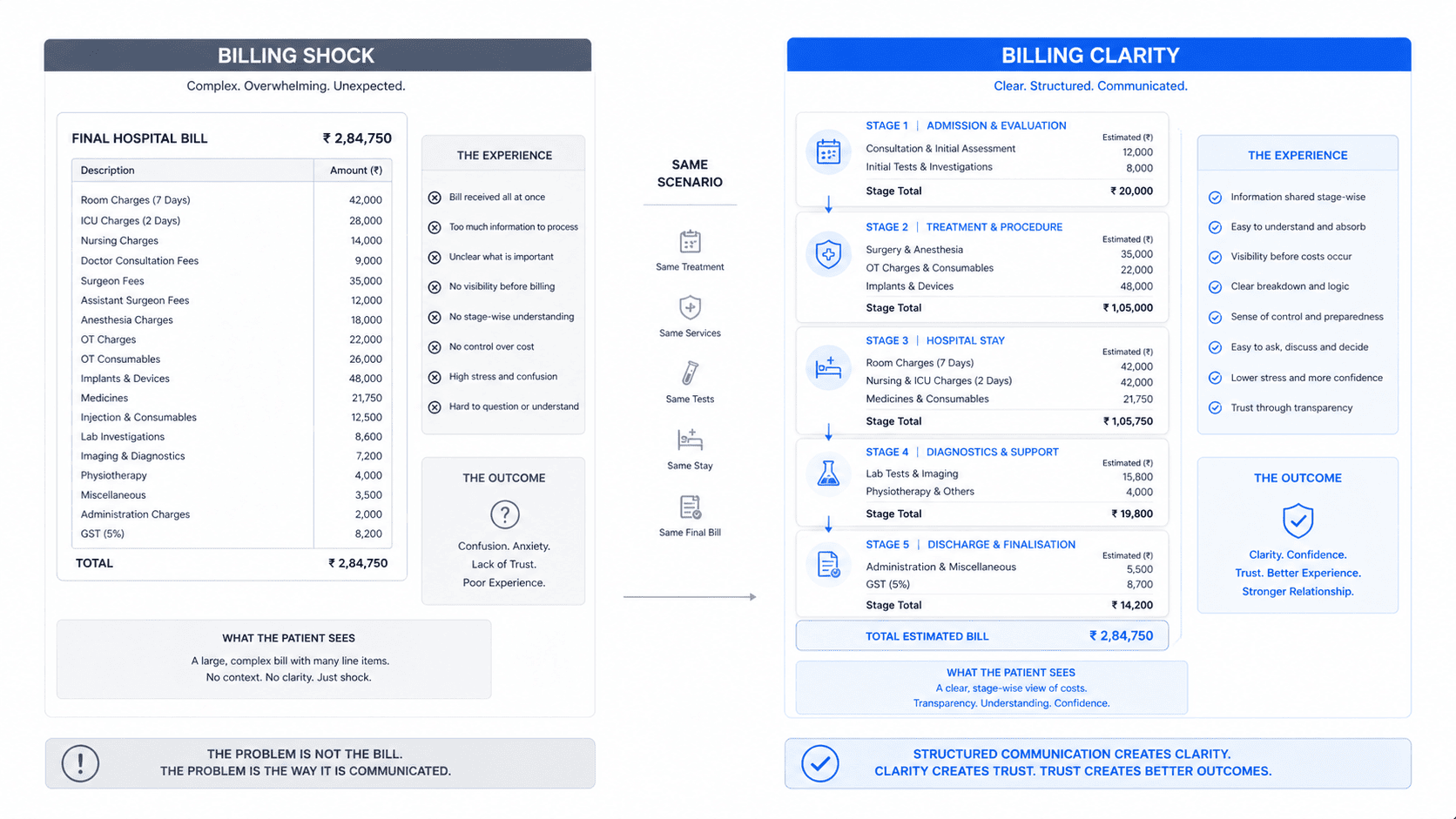
Many complaints in hospitals are not about treatment. They are about billing communication. This leads to disputes, complaints and delayed discharge.
This is not only a billing issue. This is a communication continuity issue.
The Bill Shock Complaint Loop system focuses on billing communication continuity during the patient’s hospital stay instead of only at discharge. The system ensures that:
The objective is not billing collection. The objective is billing transparency and patient communication.
The system also ensures that billing communication is not event-based, but continuous throughout the patient’s hospital journey, reducing gaps that lead to last-minute confusion.
Initial estimate understanding confirmation.
Periodic billing updates during hospitalization.
Communication when treatment changes affect billing.
Early identification of billing concerns.
Clarification of billing components.
Pre-discharge billing communication.
Final billing understanding confirmation.
This structured approach reduces last-minute disputes and improves patient satisfaction.
Many hospitals lose reputation not because of treatment, but because of billing disputes at discharge. Transparency reduces conflict and improves trust.
Hospitals focus heavily on treatment quality, infrastructure and doctors.
But patient experience is often remembered based on: Billing, Discharge, and
Communication.
The Bill Shock Complaint Loop system improves billing communication, reduces disputes and
improves overall patient experience.