+91 91577 89399
Call Us

Call Us
Email Us
Get Direction
In many hospitals, once a patient is discharged, communication between the hospital and the patient suddenly stops. Patients and their families often leave the hospital with prescriptions, instructions, precautions and follow-up advice, but once they reach home, many doubts, concerns and confusion start.
Patients may not fully understand medications, diet restrictions, activity limitations, warning signs, dressing care, follow-up schedules or test timelines. This period immediately after discharge often becomes a communication blackout period between the hospital and the patient. The Post-Discharge Blackout Prevention System is designed to maintain communication with patients after discharge to ensure continuity of care, reduce confusion and improve patient recovery experience.
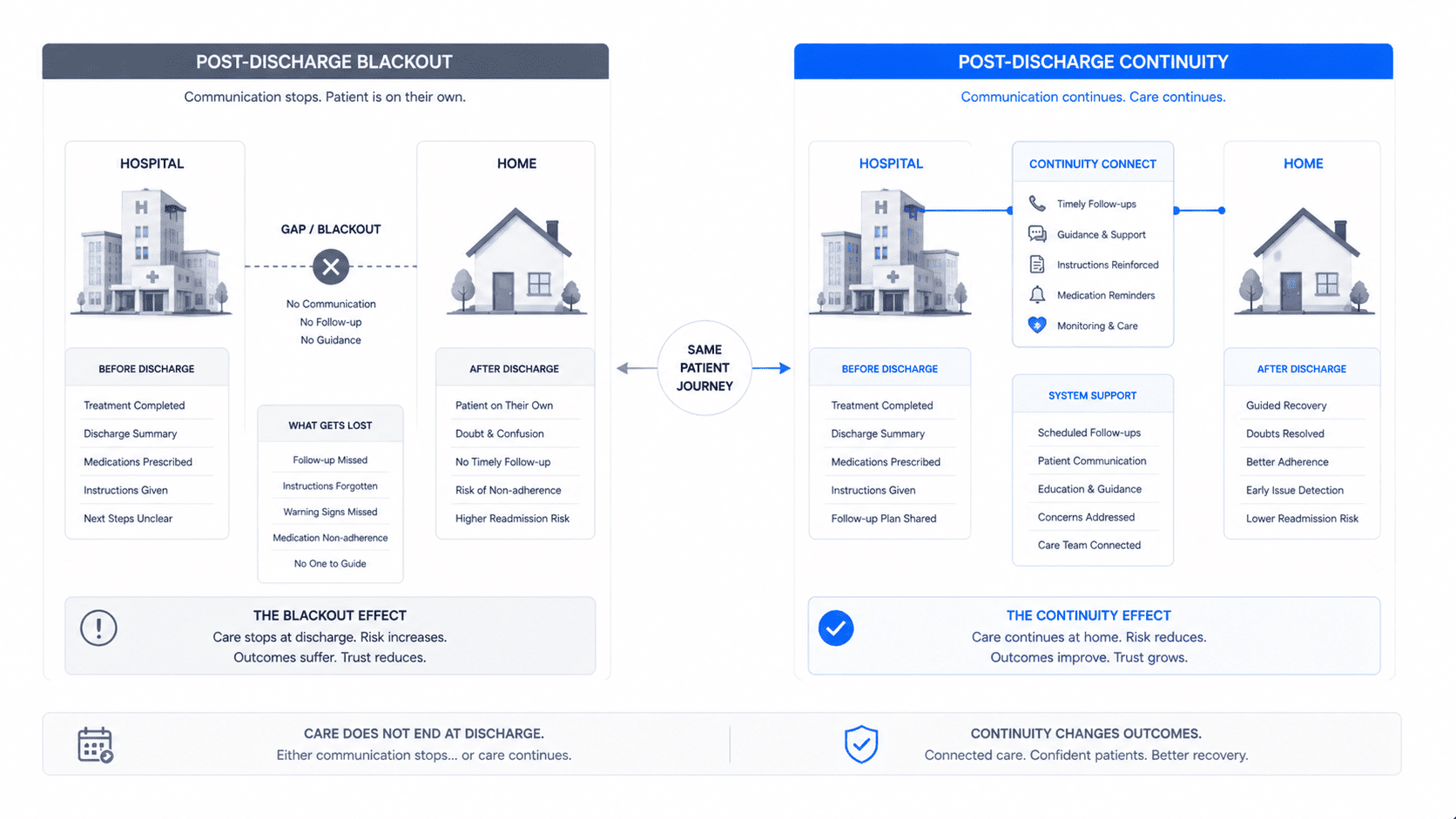
Many patient complaints and complications happen not during hospitalization, but after discharge when patients feel disconnected.
This is not a treatment problem. This is a post-discharge communication continuity problem.
The Post-Discharge Blackout Prevention System focuses on maintaining communication with patients after discharge so that they do not feel disconnected and confused during recovery. The system ensures:
The objective is continuity of care after discharge.
Post-discharge communication within a few days of discharge.
Confirmation of medication understanding and schedules.
Confirmation of diet and activity instructions.
Clarification of patient doubts or concerns from home.
Reminder for scheduled follow-up visits.
Reminder for required medical tests and timelines.
Periodic communication during the entire recovery period.
This ensures patients are supported even after leaving the hospital.
Many hospitals are judged not only by treatment, but by post-discharge support. Recovery does not end at discharge. Recovery continues at home.
Hospitals focus heavily on admission, treatment and discharge.
But patient experience and recovery largely depend on what happens after discharge.
The Post-Discharge Blackout Prevention System ensures that patients are not left alone after
discharge and that continuity of care continues even after they leave the hospital.